pickles
and their fermented brethren.

Everyone has vices. When faced with mounting stress, some people chain-smoke; some binge on junk food; some, God help them, run. Meanwhile, I pickle.
It started innocently enough, as all nasty habits do. I got a little too into Bon Appetit and its extended universe of extremely online D-list celebrity chefs. Naturally, I was served a targeted ad for quick-and-easy Classic Dill Pickles. You stuff sliced cucumbers and a handful of dill in jar and top it off with a steaming broth of water, vinegar, salt, sugar, and other shelf-stable spices and in a few hours time you’ve got your own ugly (the term du jour in the food writing world is rustic) version of Vlasic kosher spears.
It’s not rocket science. It’s barely cooking. So I suppose it was the ease that suckered me in. But, you see, pickles were a gateway drug. I was 24, underemployed, with ample time to experiment. Pickling cucumbers only entertained me for, at most, 30 minutes a month. I moved on to kimchi.
Kimchi is not exactly a pickle, but it’s not NOT a pickle. It’s a ferment, which uses naturally occurring acids to preserve food rather than the addition of some external acid, like vinegar. But I’m far less interested in the science of the whole thing than I am in the tactile experience of chopping a metric fuck ton of produce and the spiritual experience of leaving the end result up to God. Kimchi scratches that itch. I found yet another quick-and-easy recipe, this time from Sohui Kim’s Korean Home Cooking, to guide me through the hours of chopping, salting, rinsing, and massaging that turns plain napa cabbage into a funky, fiery accoutrement.
(Jesus turned water into wine, which is, not incidentally, also a ferment.)
In 1968, M.F.K. Fisher argued that the 19th century had been “the golden age of pickling.” But she is dead, and I am not (yet), so I get to say that she was short-sighted and narrow-minded when it came to acidic food preservation. Again, the Venn diagram of pickling and fermenting has a A LOT of overlap. And both processes date back literal thousands of years. I won’t bombard you with the full, culturally rich history.
To skip ahead: a funny little restaurant called Noma opened its doors in Copenhagen in 2003, and in the decades since it became a three-Michelin-star culinary Mecca, known for, among other things, its prolific “Fermentation Lab.” In 2012, Sandor Katz published his bestselling book, The Art of Fermentation, which re-popularized the practice among home cooks, and not just the hippie back-to-the-landers previously associated with funky probiotic foods. According to this survey (that I have perhaps cherry-picked to make my point), fermented foods have been the number one superfood trend every year since 2017.
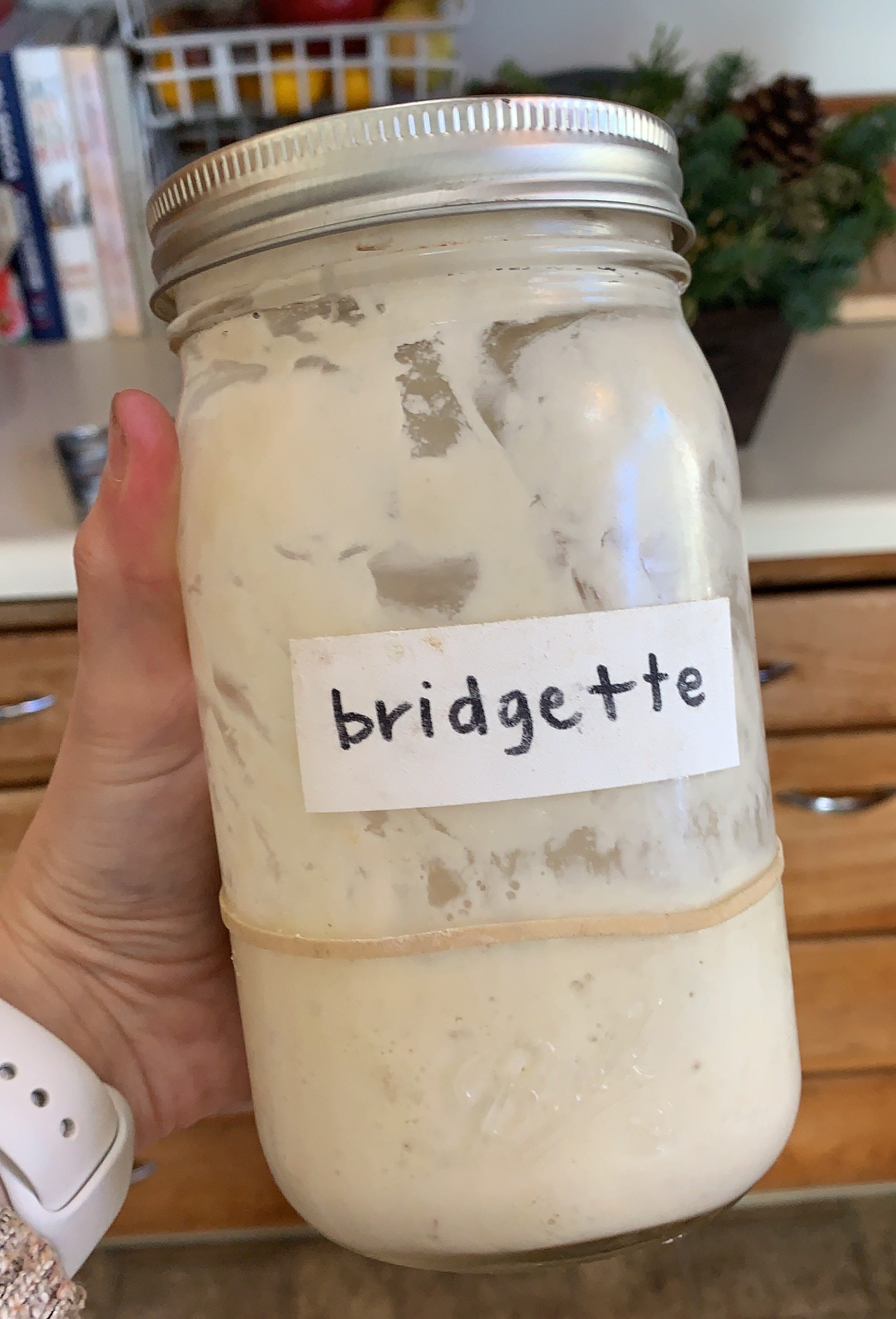
By the time the Great Sourdough Revival of 2020 rolled around, I was in the depths of my addiction. At what I thought was my lowest point, I was incubating yogurt cultures in an Instant Pot. Then my best friend gifted me a sourdough starter, cultivated lovingly in the heart of San Francisco, where apparently the microbes are extra efficient and extra tangy.1
I fed my starter weekly. In between Zoom meetings (I finally got a real job) I folded and proofed my dough. I baked gigantic loaves and squirreled them away in the freezer so they wouldn’t grow mold. I dutifully saved my sourdough discard, which I then repurposed into biscuits or bagels or pizza. I traded loaves and other baked goods for jars of sauerkraut and kombucha that my neighbors were burping in our shared garage.
It was about a year into the pandemic when my partner cheerfully suggested I sell my bread, pickles, and other kitchen experiments at a local farmers market. It was meant to be kind — a compliment even! — but I recoiled. The fizzing jars lined up like toy soldiers on our counters were meant to be a reprieve from the feelings of not-enough-ness that permeated the rest of my life — not a good enough writer, not a responsible enough dog owner, not a patient enough daughter, not a kind enough friend. Commodifying my hobby would inevitably infuse my pickles with that same anxiety.
Shortly after, I went cold turkey. Not in some protest of farmers market capitalism, but rather because I am a slave to its corporate cousin. Those everyday stressors I was trying to escape caught up to me. I commuted, and “leaned in,” and worked overtime, and started pilfering Greek yogurt cups from the office supply. My sourdough starter went rancid. I realized that store-bought kimchi tasted just fine.
Life marched on, mine a dumb pantomime of the neurotic urban professional you see at the beginning of Hallmark movies. Then I relapsed.
A few weeks ago, I decided I should take some space to gain the clarity I needed to overhaul a discombobulated first draft of an essay. A friend had pawned a glut of leftover serrano peppers off on me, so I went to work, stemming and seeding, letting the muscle memory take over. I steeped them in a simple saltwater brine and tucked the jar away in a dark, cool corner. Then all I had to do was patiently wait for the microbial magic to happen — literally and metaphorically.
Peter Piper picked a peck of pickled peppers.
I pickled a pound of peppers to produce hot sauce. It doesn’t have the same ring to it, and maybe that’s why it went so horribly wrong.
Within a week, my peppers were radiating a putrid scent and the neighborhood fruit flies had made themselves at home in my kitchen. During my period of intentional neglect, I had allowed oxygen to interact with the ferment, which in turn allowed the bad bacteria to overtake the good. The layer of fuzzy white slime that formed atop my peppers was so thick I had no choice but to flush the whole concoction down the toilet.
It was profoundly, cursedly, mind-blowing-ly… funny.
I wanted to be mad or disappointed or defeated, but I wasn’t. I had still experienced that meditative calm of preparing the ferment. But this time I’d asked for more from my kitchen project — ideally some sort of Julie & Julia epiphany that would cure my imposter syndrome and clear my writer’s block. Instead, I got a toilet full of rotten peppers and a still-incomplete draft. Sometimes a pickle is just a pickle.
***
If you’ve read this far, congratulations! Now that I’ve made a lame mockery of the addiction memoir, let’s double down and make this a pre-recipe essay too! Here’s something fun2 from M.F.K. Fisher’s “Golden Age of Pickling,” published by The New Yorker in 1968.
Lera’s Baked Fig Pickles
10 pounds firm figs, white or black
Whole cloves
5 pounds sugar
2 cups cider or wine vinegar
Wash figs and stick 1 clove in each. Make thick syrup of sugar and vinegar. Pour while hot over figs in uncovered roasting pan, and leave in very slow oven (225 F) for 2 hours. Let stand overnight, without touching. Repeat baking. Put into jars, and pour syrup to top of each jar.
This may very well just be clever marketing from the Tartine lobby, but it’s a harmless enough claim either way.
I have never made this because I am not a recipe tester and this is not a food blog. If it sucks don’t blame me.